Morning Transition
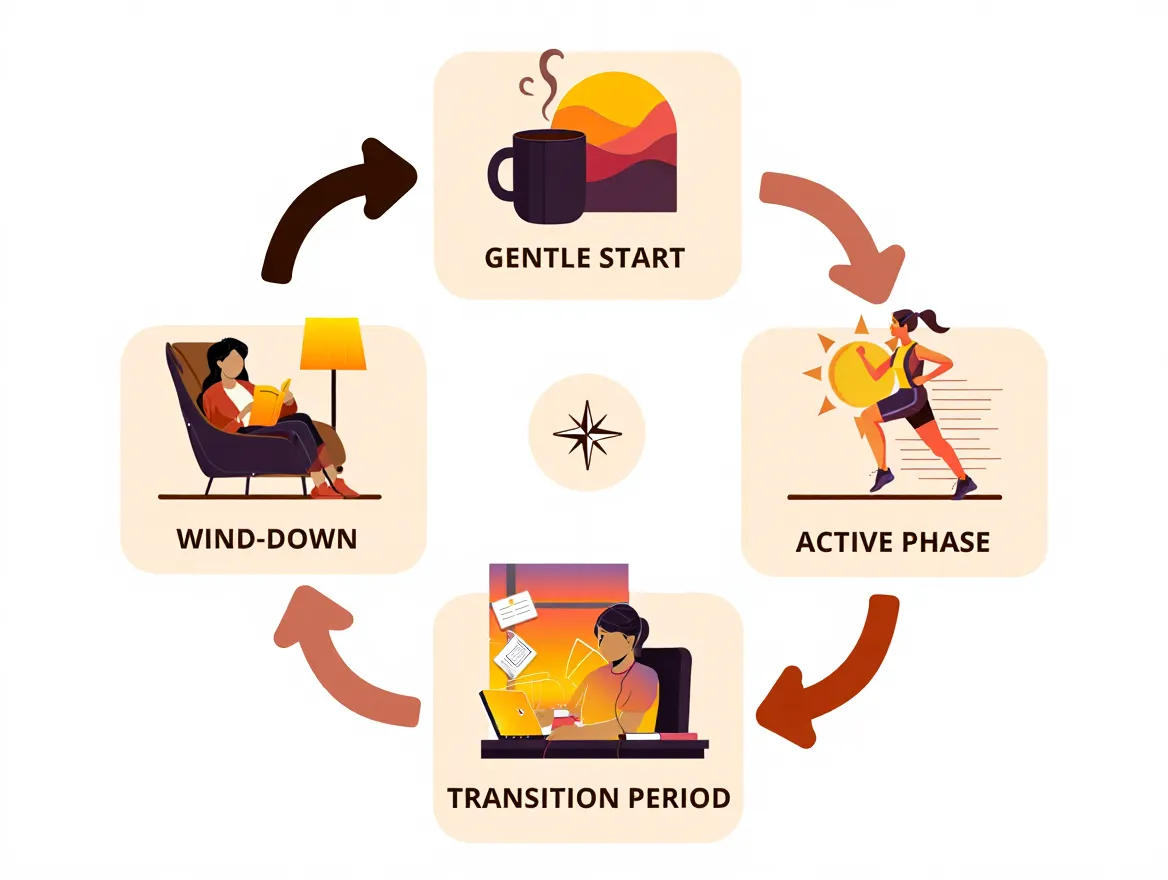
The shift from rest to activity sets the tone. A gradual beginning — without rushing — allows the body and mind to synchronize before engaging fully.
The day is not a collection of isolated events. It is a continuous arc of activity that can be approached with awareness and gentle structure.
Daily flow refers to the idea of treating the day as a single, connected sequence rather than a set of disconnected tasks. It emphasizes awareness of how one phase leads to the next.
This approach invites curiosity about personal patterns — when you naturally feel more engaged, when transitions feel abrupt, and where gentle adjustments might create a smoother experience.
It is not about optimization or peak performance but about noticing and responding to the natural rhythm of your day with intention rather than habit.
The moments between tasks are often overlooked, but they shape how the next activity begins. Approaching transitions with awareness can influence the overall quality of your daily rhythm.
The shift from rest to activity sets the tone. A gradual beginning — without rushing — allows the body and mind to synchronize before engaging fully.
Moving from a focused morning into afternoon activities often involves a natural dip. Acknowledging this and adjusting pace can support continuity.
Gradually reducing intensity toward the end of the day prepares the body for rest. An intentional tapering creates a sense of closure and calm.
This is one possible way to think about structuring the day. It is a framework for reflection, not a strict schedule to follow.
Allow time for the body to transition from rest. Light movement, hydration, and a calm environment can support a smooth start without urgency.
This period often offers a window for focused work. Alternating between concentrated tasks and brief pauses supports sustained attention without strain.
A deliberate shift in pace around midday acknowledges the natural rhythm. Nourishment, light movement, or a change of environment supports the next phase.
The afternoon may be suited for varied tasks — collaborative work, lighter projects, or creative exploration. Pacing remains moderate and adaptive.
As the day progresses, gradually reducing stimulation and intensity prepares the system for evening rest. This is a time for reflection, light activity, and winding down.
All materials and practices presented are educational and informational in nature and are aimed at supporting general well-being. They do not constitute medical diagnosis, treatment, or recommendation. Before applying any practice, especially if you have chronic conditions, please consult a physician.